



Tuesday

Tuesday 22nd September
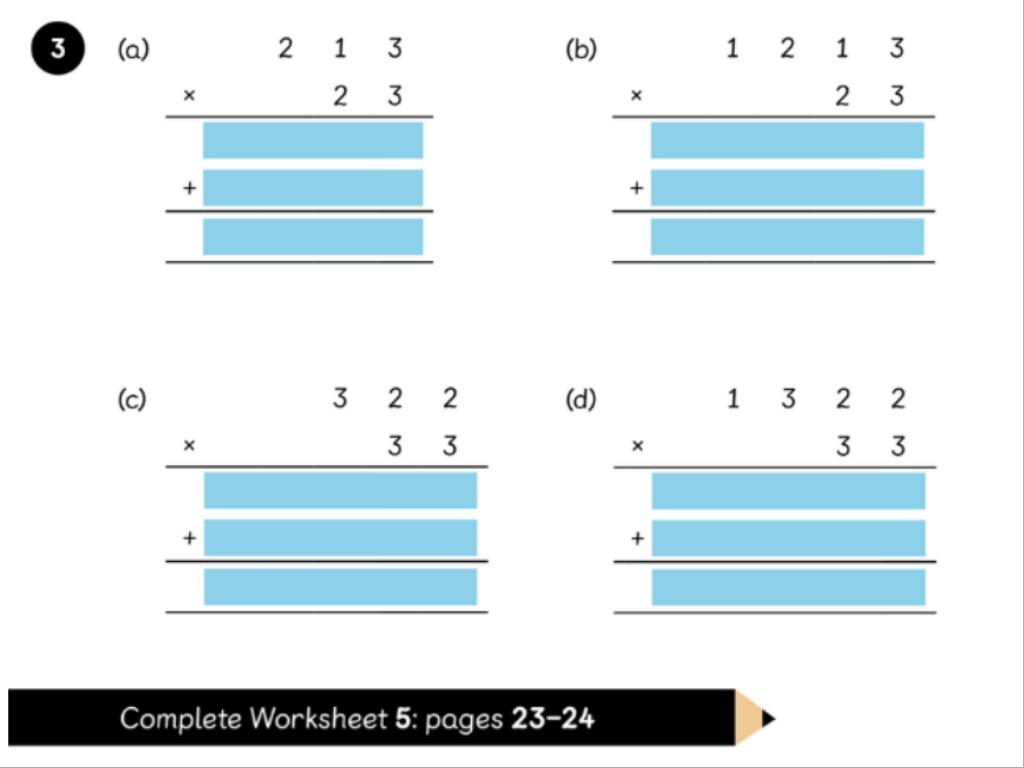
Complete the following multiplication calculations in your yellow maths jotter. Use the squares in your book to set the questions out neatly.
32 x 28
563 x 34
724 x 52
3426 x 46

22.09.26
LC: To multiply by 2-digit numbers
















Xander tightened the straps of his rucksack and looked up at the enormous mountain towering above them. The snowy peak of Mont Blanc seemed to disappear into the clouds.
“Ready?” Brad asked, forcing a smile.
Xander nodded, although his legs already felt tired. They had been walking for nearly three hours, and the narrow path was becoming steeper with every step. Cold wind whipped against their faces as they carefully picked their way across the rocky ground.
Suddenly, Brad stopped.
“What’s wrong?” Xander asked.
Brad pointed towards the path ahead. A thick blanket of snow had covered the trail, making it difficult to see where they should go.
Xander took a deep breath. The mountain seemed to be challenging them to turn back. He looked at Brad, who nodded determinedly.
“Let’s keep going,” Xander said.
Slowly, they continued upwards, one careful step at a time.
Questions
1. Retrieval:
How long had Xander and Brad been walking?
2. Inference:
How do you think Brad was feeling when he stopped and saw the snow-covered path? Give evidence from the text.
3. Authorial Choice:
Why do you think the author wrote, “The mountain seemed to be challenging them to turn back”? Explain what this suggests about Xander and Brad's journey.
Tuesday 22nd September
LC: To retrieve and record information.
Deciduous Forest Biome Fact FileWhat is a Deciduous Forest Biome?
A deciduous forest biome contains trees that lose their leaves every year. They grow in areas that have four seasons with cold winters and hot, wet summers. The changes in climate trigger the deciduous trees to transform. During autumn, the colours of the leaves change from green, to brown, to orange and yellow. When winter arrives, the trees have usually dropped all of their leaves and have empty branches.
Where are Deciduous Forest Biomes?
Deciduous forest biomes are found between the polar regions and the tropics.
How Have Plants Adapted to Living in Deciduous Forest Biomes?
When trees in deciduous forest biomes drop their leaves it helps them to save energy and keep water throughout the harsh winters. They are able to cut off the supply of water to their leaves and seal off the area between the leaf stem and tree trunk. Deciduous trees then enter a period of dormancy or sleep. They have thick bark that protects them from the cold weather. Many plants are able to use their sap to stop their roots freezing.
During spring and summer, deciduous trees flower and grow. They produce thin, broad and lightweight leaves that might be star, heart or oval shaped. Their leaves help them to absorb sunlight to make food. Some trees can grow fruits and nuts. Examples of deciduous trees include willow, ash, horse chestnut, elm, maple and birch.
The deciduous beech is Australia’s only cold-climate, winter deciduous tree. It is only found in Tasmania. Most trees that are native to Australia are evergreen. The deciduous beech is found in highland and mountainous areas that receive lots of rainfall. During winter, it drops its leaves to protect itself from frost and snow and to save energy. The dropped leaves return minerals to the soil for the next spring growth. Deciduous beech trees are slow and low-growing. Their seeds do not travel far as they have no adaptations for wind dispersal.
Oak trees have adapted to be able to live in areas with little water and nutrition. They have a taproot that goes deep into the ground to access water. Oak trees also have huge roots that go sideways. They spread far from the trunk and help the tree to stay in place during strong winds. Oak trees have a thick, solid bark that is like armour and protects them from the heat of fires. After a fire, they are able to form new seedlings quickly that grow fast. Oak trees make nuts called acorns that have seeds inside. They are heavier than most seeds and are carried away by animals like squirrels. Acorns begin to germinate very soon after falling from an oak tree
How Have Animals Adapted to Living in Deciduous Forest Biomes?
Animals such as bears, racoons, wood mice and deer live in deciduous forest biomes. They have a range of adaptations like sharp claws and strong tails to help them to climb trees. Some animals migrate during the winter and some hibernate or go into torpor. Others store food during the warmer seasons that keeps them alive throughout winter. They might put nuts and seeds into the hollows of trees or bury them in shallow holes. Some of these seeds sprout and grow into plants.
Squirrels are excellent climbers which helps them to reach food and keep away from predators. They can rotate their back paws by 180° so that they point backwards. This allows them to grip tree bark from the reverse and go down trees headfirst. Their soft, fleshy pads on the soles of their feet and sharp claws also assist with their climbing and grasping. Squirrels have large eyes that allow them to see when there is not much light. Some have special hairs on their heads and limbs that improve their sense of touch. Squirrels are able to communicate with each other and provide warnings about predators.
Skunks have some useful ways to defend themselves from predators. Their black and white striped fur and sharp teeth provide a warning for other animals to stay away from them. Skunks are able to spray a musk that smells very bad from two glands near the base of their tail. The musk is a thick, yellow liquid. It can temporarily blind predators and allow the skunks to get away to safety. Skunks are nocturnal which protects them from daytime predators and also means that they do not waste energy when it might be too warm. They are good at digging and usually live in dens. Skunks may enter a state of torpor for several days when the weather gets very cold. They are omnivores and can eat different food depending on what is available.
Questions
1. What does it mean when a tree is deciduous?2. How many seasons do deciduous forests have?
3. What happens to the leaves of deciduous trees in autumn?
4. Where in the world are deciduous forest biomes typically found?
5. Why do deciduous trees drop their leaves in winter?
6. What protects deciduous trees from cold weather?
7. Name three types of deciduous trees mentioned in the text.
8. Where is the deciduous beech tree found?
9. How do oak trees protect themselves from fires?
10. What do oak trees produce that contains seeds?
11. How do squirrels use their back paws to help them climb trees?
12. What special ability do skunks have to defend themselves from predators?
13. Why are skunks mostly active at night?
14. Name two ways animals in deciduous forests survive the winter.
15. What happens to the leaves that fall from deciduous trees in winter?

Tuesday 22nd September
LC: To understand how we see things