



Tuesday

Tuesday 15th September
Section A
Section B – Two-step BIDMAS

15.09.26
LC: To use BIDMAS to complete mixed operations calculations



Manipulating sentences
A crowd gathered around the building.
Step 1: Add adjective to the nouns.
Step 2: Add an adverb to the verb.
Step 3: Add a fronted adverbial to the sentence.
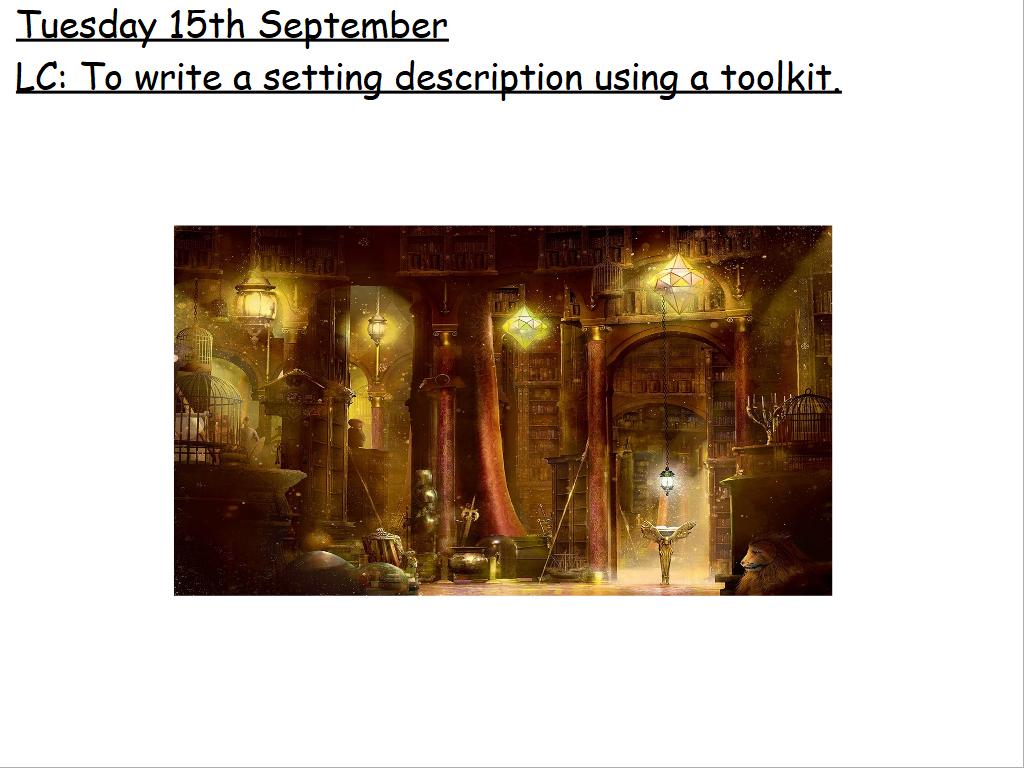
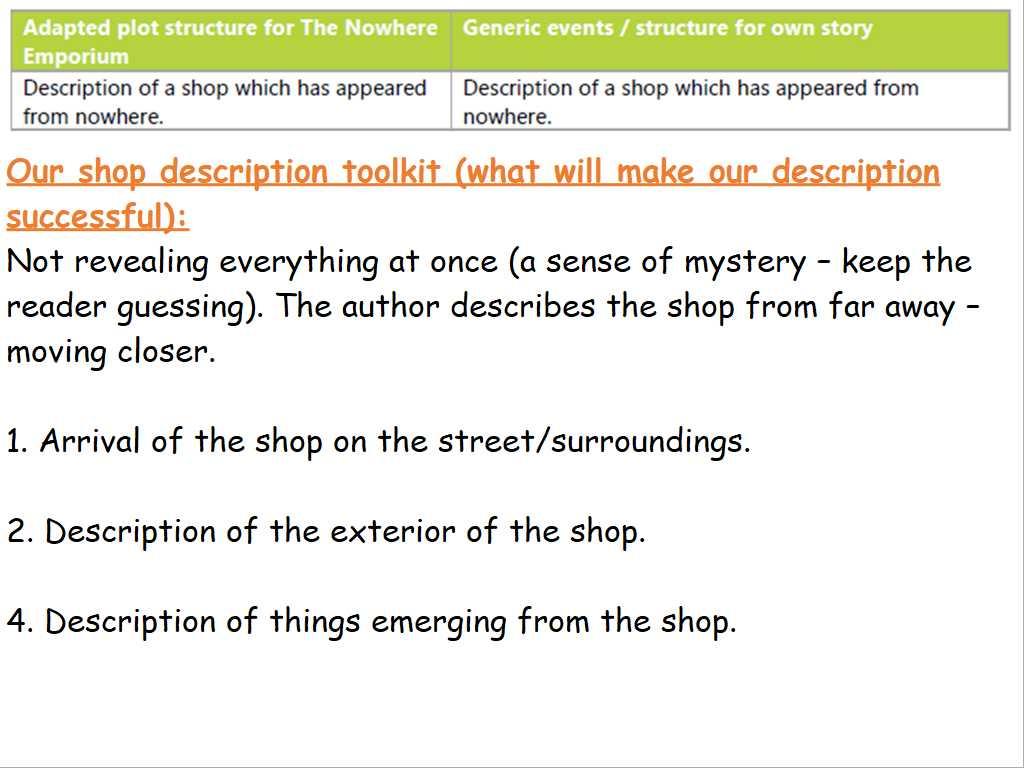
1. THE ARRIVAL & SURROUNDINGS
Sentence openers
- At first, there was nothing but…
- Without warning,…
- Slowly, the surroundings…
- Gradually,…
- Before his/her very eyes,…
- All around him/her,…
- Suddenly, the air…
- For a moment, everything…
Past-tense phrases
- the street fell silent
- the wind whispered through the trees
- shadows stretched across the pavement
- mist curled around his/her feet
- the air began to shimmer
- the darkness rippled
- a faint glow appeared
- the mist gathered around the street
- something strange began to take shape
- the ordinary surroundings seemed to change
Powerful past-tense verbs
shimmered • rippled • twisted • spiralled • flickered • appeared • emerged • gathered • formed • materialised • transformed
2. THE EXTERIOR OF THE SHOP
Sentence openers
- Standing before him/her was…
- Rising from the pavement was…
- Towering above him/her…
- In front of him/her stood…
- Above the doorway…
- Through the windows…
- Covering the walls…
Past-tense descriptive phrases
- a tall, crooked building loomed overhead
- ancient bricks covered the walls
- dusty windows glimmered in the darkness
- golden light spilled onto the pavement
- a heavy wooden door stood at the entrance
- an intricately carved doorway framed the entrance
- a crooked sign swung above the door
- strange symbols were carved into the walls
- shadows moved behind the glass
- the brass handle gleamed beneath the light
Powerful past-tense verbs
loomed • towered • gleamed • glimmered • swung • creaked • stood • covered • framed • reflected • shimmered
3. THINGS EMERGING FROM THE SHOP
Sentence openers
- Suddenly, from inside the shop…
- Without warning,…
- From the darkness emerged…
- One by one,…
- Bursting through the doorway…
- Creeping from inside…
- As the door swung open,…
- To his/her astonishment,…
Past-tense phrases
- a cloud of golden dust spilled into the street
- tiny sparks floated through the air
- strange objects tumbled onto the pavement
- glowing orbs drifted through the doorway
- colourful feathers fluttered into the street
- shadows crept along the ground
- mysterious boxes spilled from the shop
- ribbons of mist swirled around his/her feet
- a strange sound echoed from within
- hundreds of tiny objects cascaded through the doorway
Powerful past-tense verbs
spilled • streamed • poured • burst • tumbled • floated • drifted • swirled • spiralled • darted • crept • crawled • fluttered • glided • cascaded
Milo and Rex’s Adventure (RIC)
Milo tightened the straps of his rucksack and followed the narrow woodland path. His dog, Rex, bounded excitedly ahead, stopping every few seconds to sniff the ground.
They had been walking for nearly an hour when Rex suddenly froze. His ears stood upright and his tail stopped wagging. He stared towards a wall of thick bushes.
“What is it, Rex?” Milo whispered.
Rex disappeared into the bushes. A moment later, Milo heard an excited bark. He pushed through the branches and discovered a small wooden bridge stretching across a deep, rushing stream.
On the other side stood a crumbling stone archway, almost completely hidden by ivy. Milo had never seen it before.
“Come on, Rex,” he said, stepping carefully onto the bridge.
As they reached the middle, the wooden planks creaked beneath Milo’s feet. He gripped the rope handrail tightly and looked down at the water swirling below.
Rex barked from the other side.
Milo took a deep breath and continued. Whatever lay beyond the archway, he was determined to find out.
Questions
1. Retrieval
How long had Milo and Rex been walking when Rex suddenly stopped?
2. Inference
How do you think Milo felt when he walked across the bridge? Use evidence from the text to explain your answer.
3. Choice
Why do you think the author uses the phrase “the wooden planks creaked beneath Milo’s feet”? What effect does this have on the reader?
Tuesday 15th September
The Tundra Biome
Imagine stepping outside and finding yourself in a vast landscape where the ground is covered with snow, icy winds are blowing and there are hardly any trees in sight. This is the tundra, one of the coldest and most unusual biomes on our planet. Tundra regions can be found in northern Canada, Alaska, Greenland, Scandinavia and parts of Russia. There is also a type of tundra found on the tops of extremely high mountains.
For much of the year, the tundra is bitterly cold. During winter, temperatures can fall far below freezing and the days can be extremely short. In some areas, darkness can last for many hours. However, summer brings a dramatic change. The temperature rises slightly, the snow begins to melt and sunlight can remain in the sky for almost the entire day. Although the summer is short, it is an important time for life in the tundra.
One of the most fascinating features of the tundra is permafrost. Permafrost is a layer of soil that stays frozen for at least two years. During the warmer months, only the top layer of soil usually thaws. This creates a thin layer where plants can grow, but their roots cannot travel very deeply because of the frozen ground below.
As a result, there are very few trees in the tundra. Instead, the landscape is covered by mosses, lichens, grasses, small flowers and low-growing shrubs. These plants have adapted to survive strong winds, freezing temperatures and a short growing season. Some plants grow close to the ground, where they are protected from the harshest winds.
Despite appearing empty and lifeless at first, the tundra is home to many fascinating animals. Arctic foxes, reindeer, snowy owls, polar bears and Arctic hares have all adapted to survive in this challenging environment. Many animals have thick layers of fur or feathers to keep them warm. Some, such as the Arctic fox, change the colour of their fur during the year. This helps them blend into their surroundings and avoid predators.
The arrival of summer causes the tundra to burst into life. Migratory birds travel thousands of kilometres to feed and raise their young. Insects become more common, providing food for birds and other animals. Plants grow rapidly during the brief warm period, giving herbivores plenty to eat. For a few weeks, the tundra can become a surprisingly busy place.
However, the tundra is a fragile ecosystem. Climate change is causing temperatures in many Arctic regions to rise. As the frozen ground begins to thaw, the landscape can change and plants and animals may struggle to survive. Scientists are carefully studying these changes because the tundra plays an important role in Earth's climate system.
The tundra may seem like a frozen wilderness, but it is far from lifeless. Every plant and animal has a role to play, and each has developed remarkable ways of surviving the extreme conditions. It is a place where life may be difficult, but it has found a way to endure.
Questions
Retrieval
1. Name three places where tundra can be found.
2. What is permafrost?
3. Why are there very few trees in the tundra?
4. Name three animals that live in the tundra.
Vocabulary
5. Find and copy a word from the text that means “animals that travel from one place to another at particular times of the year.”
6. What does the word “fragile” mean in the seventh paragraph?
Inference
7. Why do you think some tundra plants grow close to the ground?
8. How can you tell that summer is an important time for animals living in the tundra?
Authorial Choice
9. Why do you think the author begins the text by asking the reader to “Imagine stepping outside” into the tundra? What effect does this have?
Explanation
10. Explain how plants and animals have adapted to survive in the harsh conditions of the tundra. Use evidence from the text in your answer.

Tuesday 15th September
LC: To investigate the shapes of shadows