



Wednesday 7th October 2026
RIC

R - What did paintings on household objects show?
I - Why might some of the homes of wealthy people have survived?
C - Why did the author choose to use this specific heading and why is it bold?
Main
LC: Make predictions based on details stated and implied.
You can make a good prediction by:
-
Looking for clues in the text (words, pictures, or actions).
-
Thinking about what you already know from your own experiences.
-
Explaining why you think that will happen.
Let's look at our LC for today. What do the words stated and implied mean?
Is the information about how Meena is feeling stated or implied in this sentence?
Meena was tired.
Is the information about how Meena is feeling stated or implied in this sentence?
Meena had woken up very early that morning and could hardly keep her eyes open at school.
Let's look at the below text and predict what might happen next.
Luca’s Dream
Luca had always been inspired by stories of courageous explorers; ever since he was a young child, he had dreamed of embarking on an exciting expedition. Luca stood at the foot of the mountain; he tightened the laces on his hiking boots and packed his water bottle in his rucksack. It was time.
What do you predict will happen next?
Where is the evidence in the text?
Activity
The Mystery at Maple Street
It was nearly sunset when Ella noticed something strange. Every evening that week, the old house at the end of Maple Street had one light flicker on and off in the upstairs window. No one had lived there for years—not since the Parkers moved away.
Ella nudged her best friend, Sam, as they rode their bikes past.
“Did you see that?” she asked.
Sam squinted. “Probably just a reflection.”
But the next night, the same thing happened. And this time, they both heard a soft creaking sound, like footsteps inside.
“Let’s go check it out,” said Sam eagerly.
Ella hesitated. “What if someone’s in there?”
Sam grinned. “Then we’ll find out who.”
They parked their bikes by the gate. The wind rustled through the trees as Ella slowly reached for the handle on the old wooden door. It creaked open a few inches...
What do you predict will happen next?
Where is the evidence in the text?
I predict...
because in the text is states...
Adapted
Wednesday 7th October 2026
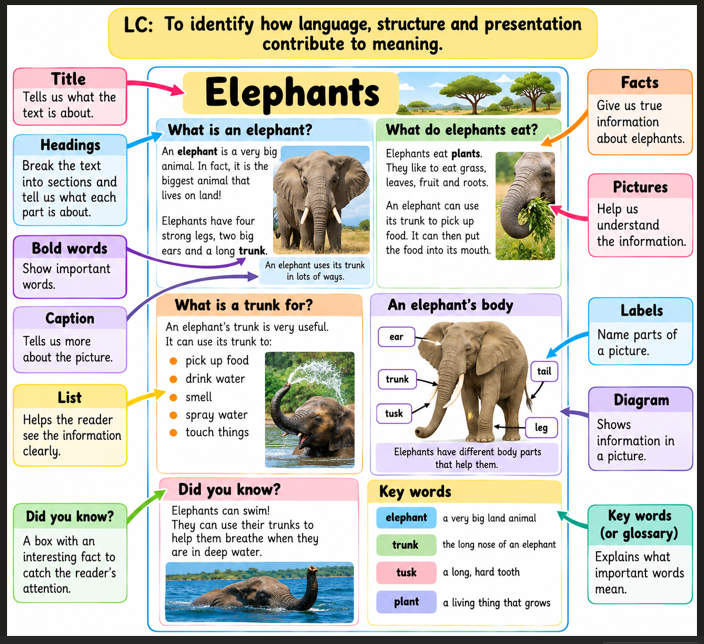
LC: to identify how language, structure and presentation contribute to meaning.
Grammar Warm Up
LC: to identify cohesive devices to link ideas across paragraphs


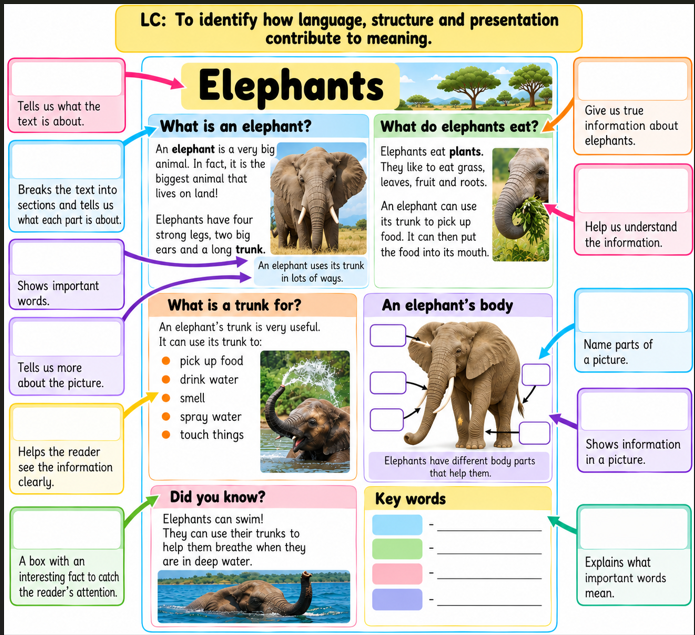
Use mark up to:
draw arrows
to match the presentational devices on the text.

Who is the audience for this text?
What is its purpose?
Discuss with your partner.
I think the audience for the the text, 'Roman Britain' is .......
The purpose of this text is to .....
I know this because .....
Read the text below.
Annotate the language and design features that the writer has used.
Let's add to our Non-Fiction Toolkit.

Task

Let's add rhetorical questions to our Toolkit along with
clear paragraphs, connecting phrases, headings and sub-headings.

Non-fiction writing is usually formal.
Can you match the formal connecting phrases to their meaning?
AND/ALSO BUT SO


Adapted:
Check your answers:

7.10.26
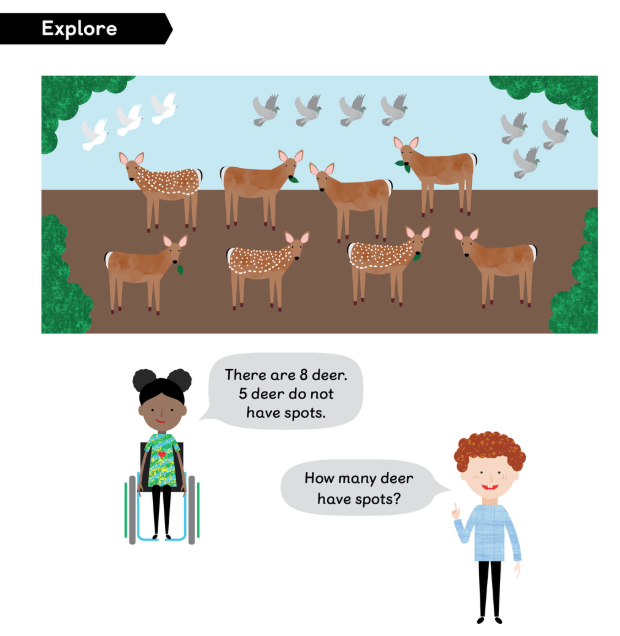
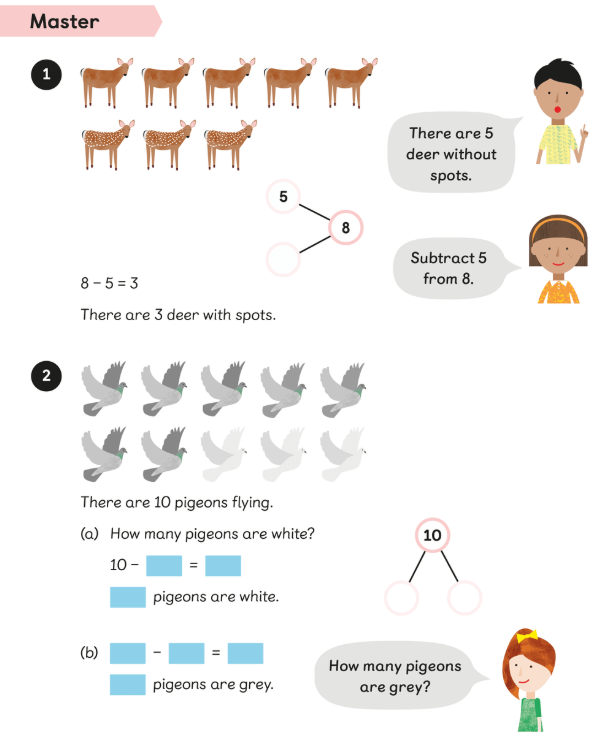
LC: To be able to add and subtract using the column method and number bonds with numbers to 1 000 000.
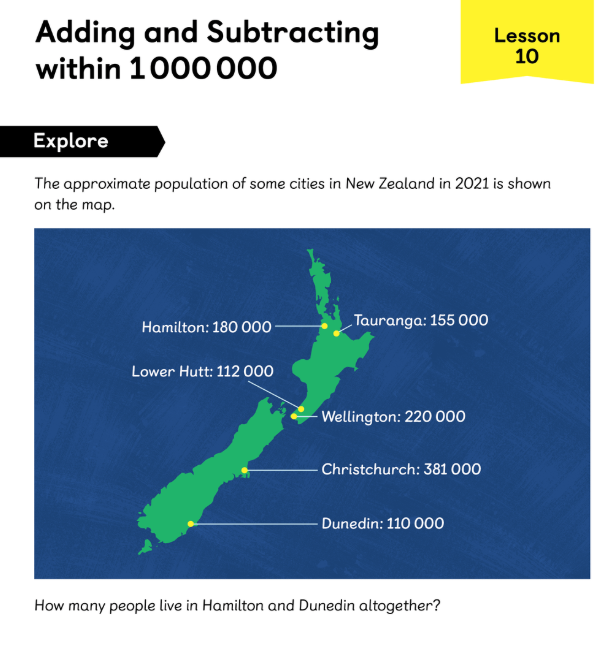
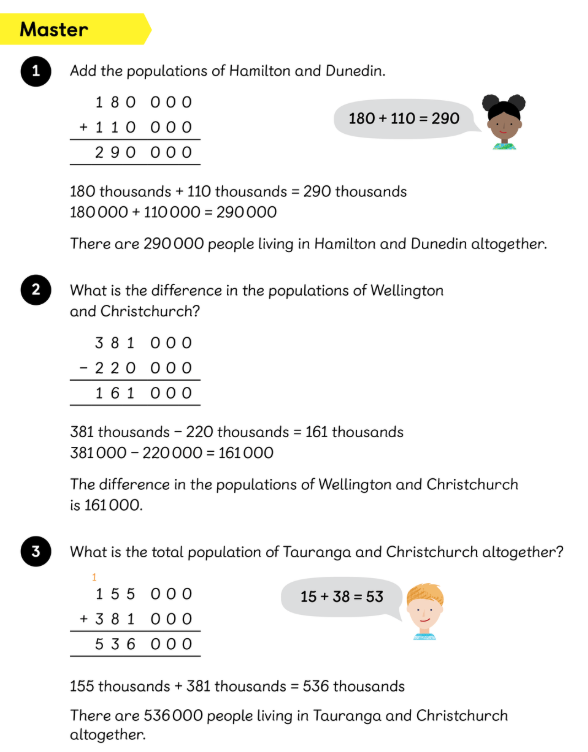
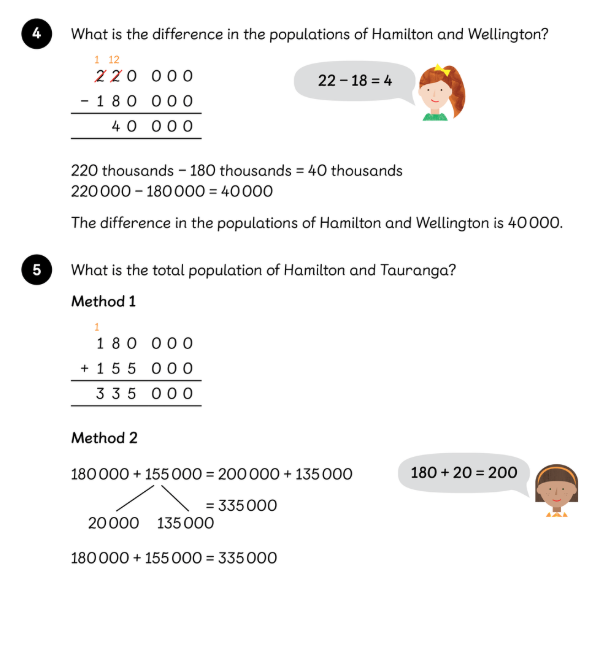
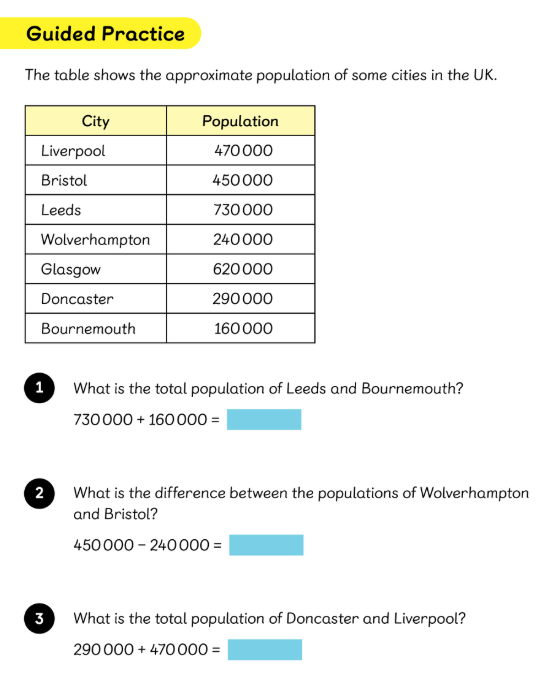
Adapted
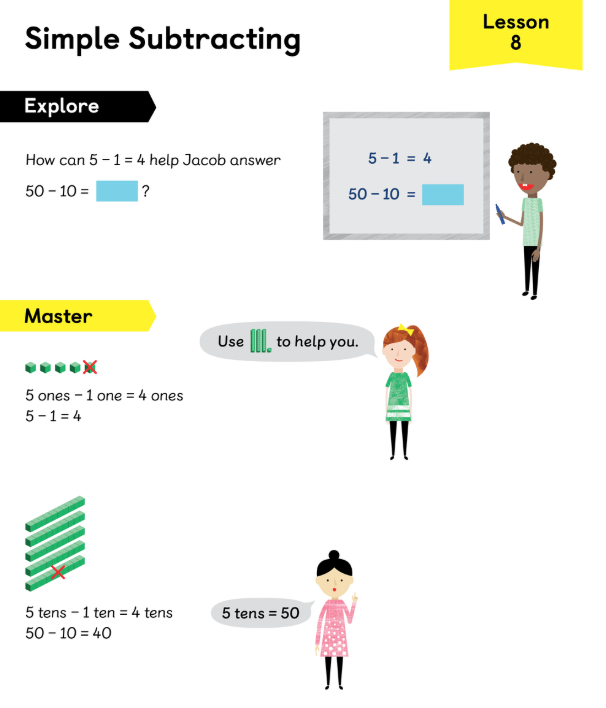
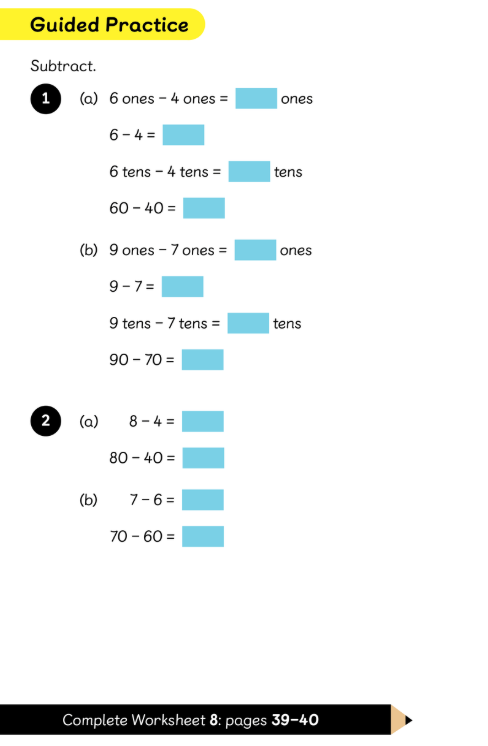
LC: To be able to subtract tens by recognising its relationship to subtracting ones.
Adapted 2:
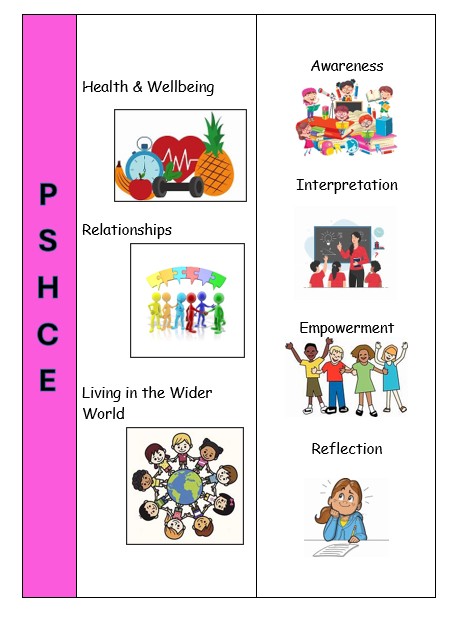

World Mental Health Day - Saturday 10th October 2026
 World Mental Health Day takes place every year on the 10th October. It’s a reminder of the importance of good mental health and the need to prioritise and invest in good mental health.
The World Mental Health Day theme for 2026 is "It is Time to Prioritize Mental Health in the Workplace"
Activity
What makes you happy?
Write or draw an image in the thought bubbles.


Wednesday 7th October 2026
LC: To know the effect of water resistance.
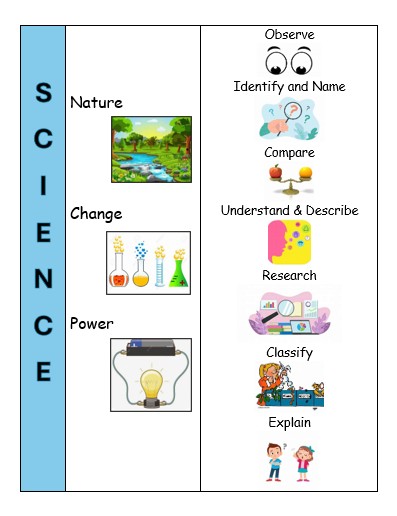


Today you are going to plan your own science experiment to investigate water resistance.
Your key question is:
How can we plan a fair test to investigate the effects of water resistance?
Title: Does the shape of an object affect water resistance?
Aim:
Hypothesis/ prediction:
Equipment:
Method:
Adapted:
Water resistance is the push of water against something that is moving. It can slow things down.
Simple example
Put your hand in water and move it:
- Move your hand slowly - it feels quite easy.
- Move your hand quickly - you can feel the water pushing against your hand.
That push is water resistance!
Have a go at this.
Part 2:
LC: Create 3D shapes (cone, sphere, cube) of equal mass to prepare for the upcoming water resistance experiment.

Task
We are going to make three different 3D shapes out of modelling clay: a cone, a sphere, and a cube.
We will make sure each shape is the same weight, so they are fair to compare in our next science lesson.
Why are we doing this?
Next lesson, we will be testing how these shapes move through water to answer the question:
Does the shape of an object affect water resistance?
By making the shapes the same weight, we make our test fair. That way, the only thing that is different is the shape. This helps us find out whether it is really the shape that changes how an object moves through water, and whether the shape makes a difference to the water resistance it experiences.
Steps:
1. Weighing the clay:
Each group measures out three equal amounts of clay (e.g., 50g each). This ensures all shapes are the same weight.
2. Moulding the shapes:
- Sphere: roll into a smooth ball.
- Cube: press into a block, flatten sides, use ruler/knife to sharpen edges.
- Cone: roll into a ball, then taper one end into a point while keeping the base flat.
3. Label & store:
Place shapes on trays/paper with names for next lesson.
Stewards of Our World
Big question: If something belongs to everyone, whose job is it to look after it?
Key vocabulary: steward, responsibility, environment, protect
Opening – The mystery caretaker
“Imagine a plant doesn't belong to me. It doesn't belong to your teacher. It belongs to everyone in school.”
Ask:
“So whose responsibility is it to look after it?”
“Sometimes, when something is everyone's responsibility, people start thinking it's somebody else's responsibility.”
Stewardship: caring responsibly for something that has been entrusted to us.
Main activity – What would a good steward do?
Signal which demonstrates good stewardship:
- dropping litter / picking it up
- leaving taps running / saving water
- damaging plants / protecting habitats
- wasting food / taking what you need
- throwing everything away / reusing and recycling
- disturbing wildlife / observing it carefully.
Harder:
“What if you see litter but you didn't drop it?”
Discuss the difference between fault and responsibility.
You didn't cause the problem, but you may still be able to help.
The ripple effect
“Small actions spread.”
Imagine what would happen if:
one person picked up one piece of litter.
Then 30 children did.
Then 300 children did.
Then everyone did it regularly.
Linked to pupil voice: children aren't simply waiting until adulthood to have ideas about their environment. Their views matter now.
UNCRC link
Article 12 – Respect for children's views: children have the right to give their opinions about matters affecting them.
Article 24 – Health: a clean, safe environment contributes to children's health.
Article 29 – Aims of education: education should develop respect for the natural environment.
Environmental protection is increasingly explicitly connected with children's rights; UNCRC General Comment No. 26 addresses children's rights and environmental issues including climate change, biodiversity loss and pollution.
British Values
Democracy – pupils can express their views and participate in decisions about their school environment.
Rule of law – environmental rules and laws help protect shared places, people and wildlife.
Individual liberty – our choices matter, but freedom comes with responsibility for how our choices affect others.
Mutual respect – stewardship involves considering other people, future generations and the shared environment.
Government guidance specifically links British Values with pupils accepting responsibility, showing initiative and understanding how they can contribute positively to their local community and wider society.
Whole-class pledge
“What's one realistic thing our class could change this week?”
Examples could include reducing wasted paper, checking lights, reducing food waste, caring for the playground or improving recycling.
Vote on one action and try it for a week.
This creates a particularly clear Democracy + stewardship link.
Take-away: Being a steward means noticing what needs caring for and choosing to act.