


Monday 5th October 2026
-
Round 67,849 to the nearest 10.
-
Round 384,621 to the nearest 1,000.
-
Write 345,678 in words.
-
Identify the fronted adverbial: Without warning, the enormous waves crashed onto the shore.
-
Change this sentence into the past tense: The explorer walks through the jungle.
- Add in an expanded noun phrase to the sentence: The lady walked through the shopping mall.
RIC

R - When did men become soldiers?
I - What do you think the word 'military' means? Can you find clues in the text to help?
C - What feature has the author included to help us visualize and understand information?
Main
LC: Make predictions based on details stated and implied.
What is a prediction?
As we read, we naturally make predictions (guesses) about things like:
-
what is going to happen next
-
what unfamiliar words mean
We use clues in what we have already read to make these predictions.
These clues are called context.
Remember!
When you are making predictions about a story, think about the characters, the setting and the plot.
Ask yourself questions, like:
- What is happening?
- Why did he do that?
- Will that be important later in the plot?
- I wonder why that has happened now?

-
A prediction isn’t what you want to happen next, it’s what you think will happen next, based on the story.
-
Stay true to what you know and don’t let your imagination run away with you!
Watch the first part of the Sir Gawain and the Green Knight story again, all the way to the end.
Think about the title of this legend. Who is Sir Gawain and why haven’t we met him yet?
Activity
What do you think will happen next?
Now you are going to continue the story, based on your predictions, by writing the next paragraph - about 8 to 10 sentences .
I predict...
Now lets watch the second part of the story to find out if your prediction was correct!
Adapted
Monday 5th October 2026
LC: to distinguish between statements of fact or opinion within a text.
Grammar Warm Up
LC: to edit a relative clause with 'which' to ensure it is grammatically correct.
Look at these sentences and spot the mistakes!

Rewrite them so that they use a relative clause with 'which' correctly.
1. My car, which is white.
2. The castle, which was on a hill, it was old.
3. The Olympic Games which began in 776BC they were only for men.
4. The Prince which was brave lived in Wales.


What is the difference between facts and opinions?
What kind of words do opinions use?
Now think of:
1 fact
1 opinion
about Stoneyholme School.

Read the texts below.
HIGHLIGHT the facts
UNDERLINE the opinions.
Text 1

Text 2

Adapted:
LC: To recall simple facts.
Elephants
Elephants are very big animals. They are the biggest animals that live on land.
Elephants eat grass, fruit, roots and bark. They use their long trunks to pick up food and put it into their mouths.
An elephant’s trunk is very useful. It can use its trunk to smell, breathe, drink and spray water.
Elephants live in families. They can care for and help each other.
Key Words
elephant – a very large animal
trunk – an elephant’s long nose
herbivore – an animal that eats plants
bark – the outside of a tree
roots – the parts of a plant under the ground
Talk about the text
- What do elephants eat?
- What can an elephant do with its trunk?
- What is one fact you have learnt about elephants?
- Tell your partner your favourite elephant fact.
Task: write 3 facts about elephants.

5.10.26
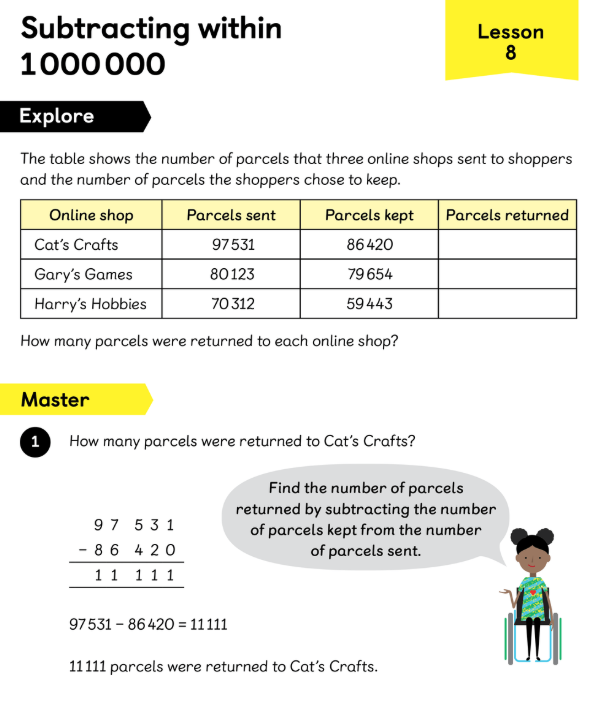
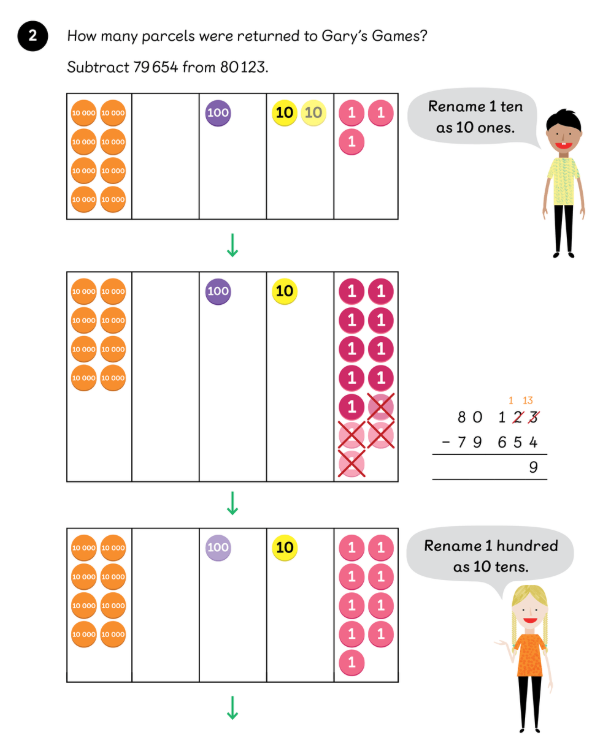
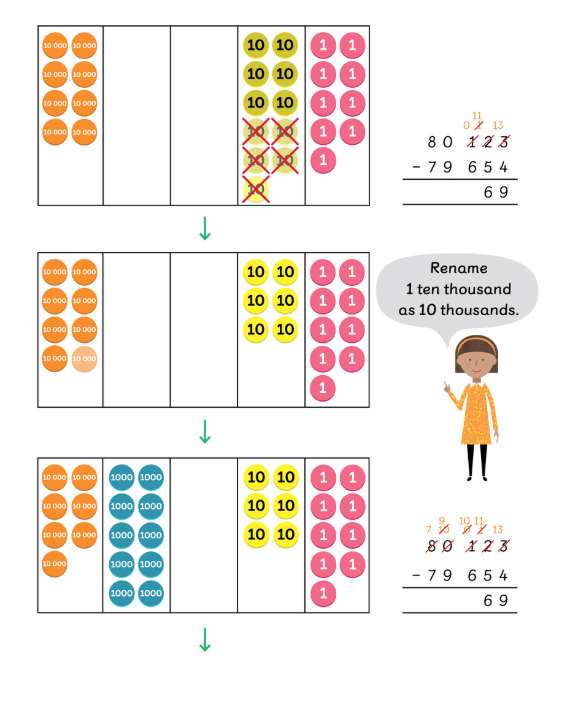
To be able to consolidate and refine subtraction skills and place-value knowledge to solve subtraction problems.
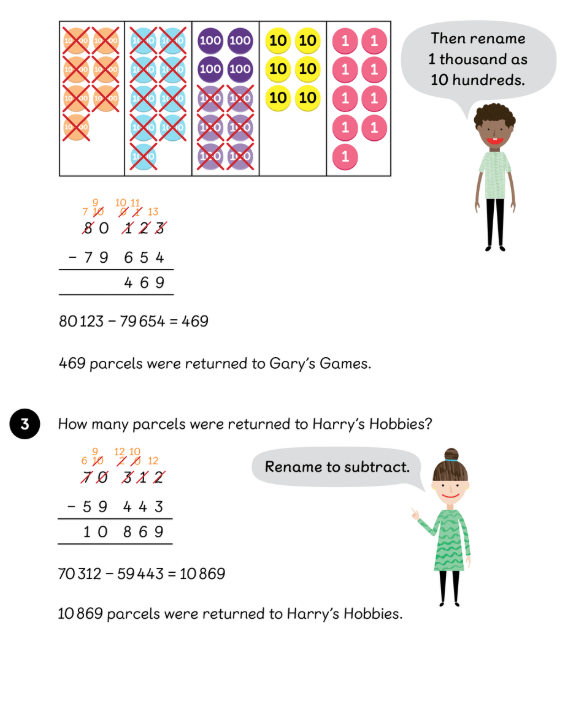
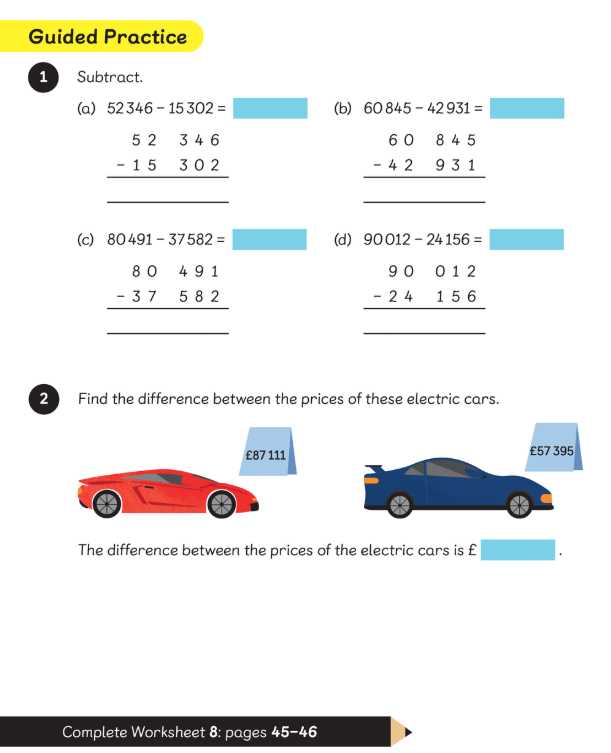
Adapted
LC: To be able to subtract ones from a 2-digit number without renaming.
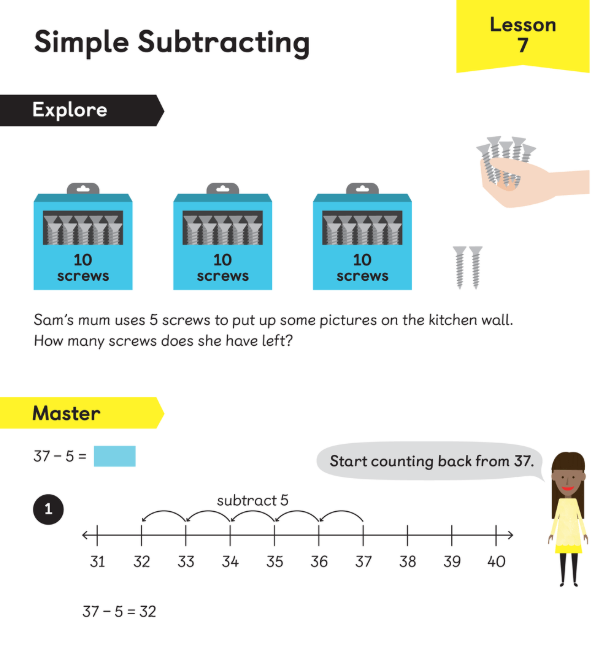
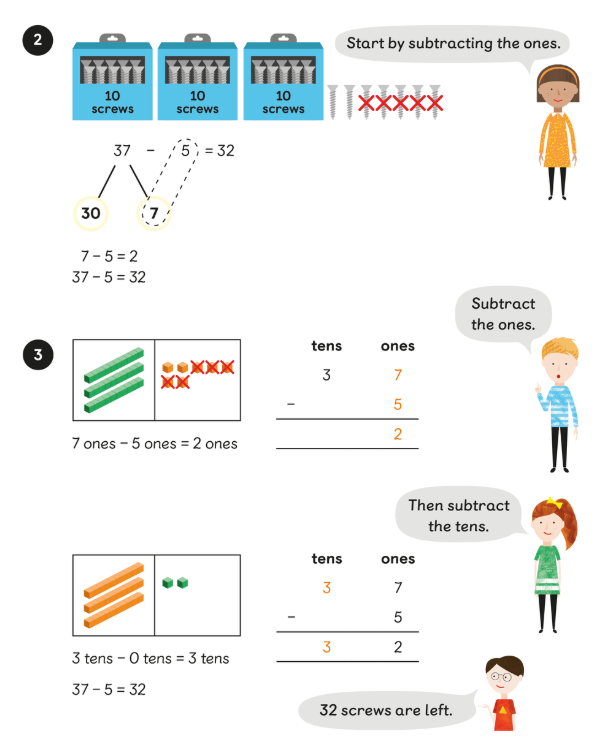
Monday 5th October 2026
LC: To explain how the Lord’s Prayer can guide Christians in how they live and treat others.

The Lord’s Prayer is a prayer that Jesus taught his followers. Christians use it to praise God, ask for what they need, ask for forgiveness and seek help to make good choices.
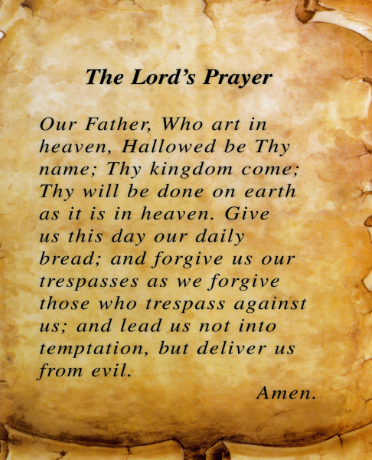
- Who taught the Lord’s Prayer? → Jesus.
- Who are Christians praying to? → God.
- What do Christians ask God for? → Their needs, forgiveness and help.
- What does it say about forgiveness? → Christians ask God to forgive them and are reminded to forgive others.
- How might it guide Christians? → It can encourage them to forgive, make good choices and treat others well.
Link to today’s LC:
Today we are going to focus on what the Lord’s Prayer teaches Christians about forgiveness and how this might affect the way they live.
Scenario 1 – The Broken Model
Sam has spent all week making a model for a school project. At lunchtime, Alex picks it up without asking and accidentally drops it. Part of it breaks. Alex says sorry, but Sam is very angry.
Discuss:
- What has gone wrong?
- How might Sam be feeling?
- How could forgiveness be shown?
- How might the Lord’s Prayer guide a Christian in this situation?
Scenario 2 – Left Out
A group of friends are playing a game at break. They deliberately tell Maya that she cannot join in. The next day, they realise they were unkind and ask Maya to play with them. Maya is still upset.
Discuss:
- What has gone wrong?
- Does Maya have to forget what happened in order to forgive?
- What could the friends do to put things right?
- How might the Lord’s Prayer guide a Christian?
Scenario 3 – The Argument
Two brothers, Leo and Ben, both want to use the same game. They argue and say unkind things to each other. Later, they both regret what they said, but neither wants to apologise first.
Discuss:
- What has gone wrong?
- What could Leo and Ben do next?
- How could they show forgiveness?
- What might “forgive us… as we forgive…” encourage a Christian to do?
Scenario 4 – The Lie
Ella tells her teacher that Noah broke a classroom ruler, even though she knows he didn’t. Noah gets into trouble. Later, Ella feels guilty and admits that she lied.
Discuss:
- What has gone wrong?
- What should Ella do to put things right?
- What might Noah do?
- Does forgiving Ella mean that lying was acceptable?
- How might the Lord’s Prayer guide a Christian?
Challenge question for all four:
Why might forgiving someone be difficult, even if a Christian believes forgiveness is important?
Task: In your books answer the questions from your discussion for your scenario
- What has gone wrong?
- What should Ella do to put things right?
- What might Noah do?
- Does forgiving Ella mean that lying was acceptable?
- How might the Lord’s Prayer guide a Christian?
Adapted:
What Would You Do?
Read the scenario:
Tom breaks his friend’s pencil. He says sorry. His friend is upset.
- Tick the actions that show forgiveness:
☐ Shout at Tom.
☐ Accept his apology.
☐ Try to be friends again.
☐ Break Tom’s pencil.
☐ Talk calmly about what happened.
- Complete the sentences using the word bank.
Word bank: forgive • sorry • kind • God • others
- Christians ask ________ to forgive them.
- Christians should try to ________ other people.
- Saying ________ can help put things right.
- Forgiveness can help Christians be ________ to others.
- Draw it!
Draw a picture showing Tom and his friend making things right.
Our World
Big question: What makes our world special?
Key message: Our world is full of extraordinary people, places and living things. We share it with others, and every child has rights that help them to grow, learn and flourish.
Opening – What's in our world?

“What can you see?”
“Who does this planet belong to?”
“What things do all people need to live and grow?”
“Do children everywhere have the same needs?”
Although children live in very different places and have different cultures, languages, religions and ways of life, all children have rights.
Main activity – A wonderful world
Below is a picture with an ocean, forest, mountain, animal, busy town/city, and children playing.
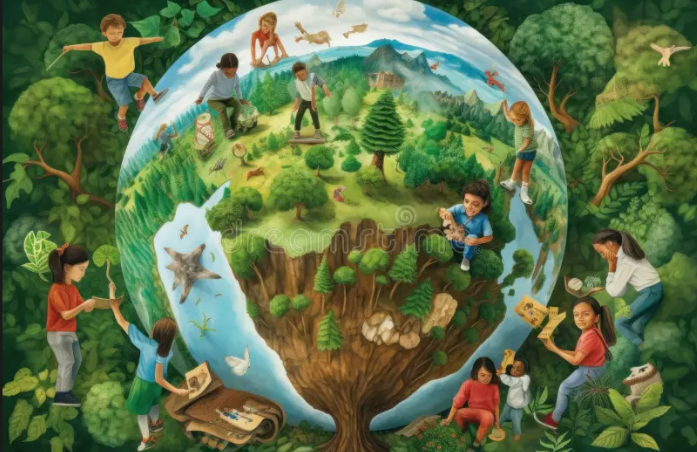
“What is wonderful about this part of our world?”
“Imagine somebody gave you responsibility for looking after the whole planet for one day. What would you want to protect?”
Children's rights and the environment are connected. Children need a safe and healthy world in order to enjoy their rights. The UN Committee on the Rights of the Child has explicitly recognised children's right to a clean, healthy and sustainable environment.
UNCRC link
Article 6 – Life, survival and development: every child has the right to develop in the best possible way.
Article 24 – Health: children have the right to the best health possible, including clean water, healthy food and a clean and safe environment.
Article 29 – Aims of education: education should help children develop their talents and learn to respect other people, their rights and the environment.
British Values
Mutual respect – recognising that the world is shared with other people and treating people and places with care.
Tolerance of different faiths and beliefs – appreciating that people around the world have different cultures, religions and beliefs.
Individual liberty – understanding that children have rights and should have opportunities to develop and flourish.
Reflection
Be silent for a few moments and picture somewhere in the world that they think is beautiful.
“Think of one thing about our world that you are grateful for. Now think of one thing you can do to help keep our world special.”
Take-away: Our world is precious, and we all belong to it.