

Tuesday 7th July 2026
LC: To build on other people’s ideas to create our shared vision for Year 5.
Tongue Fu & Brown Belt
Brown Belt Objective: Encourage teamwork by building on others’ ideas.
Tongue Fu Talk Move: Build – listen carefully and extend another person’s idea.
- I listen carefully.
• I use a Tongue Fu talk move to build on someone else’s idea.
• I help my group reach a shared decision.
Starter (10 minutes) – Tongue Fu Warm-Up
Display the statement: 'Year 5 should be fun.'
Model a poor response:
'No, I think it should be harder.'
Then model a Tongue Fu Build response:
'I'd like to build on that. Year 5 should be fun because we learn exciting new things.'
Invite children to practise using:
• I'd like to build on your idea...
• I agree and...
• We could also...
• That makes me think...
Main Activity (30 minutes) – Build Our Year 5 Charter
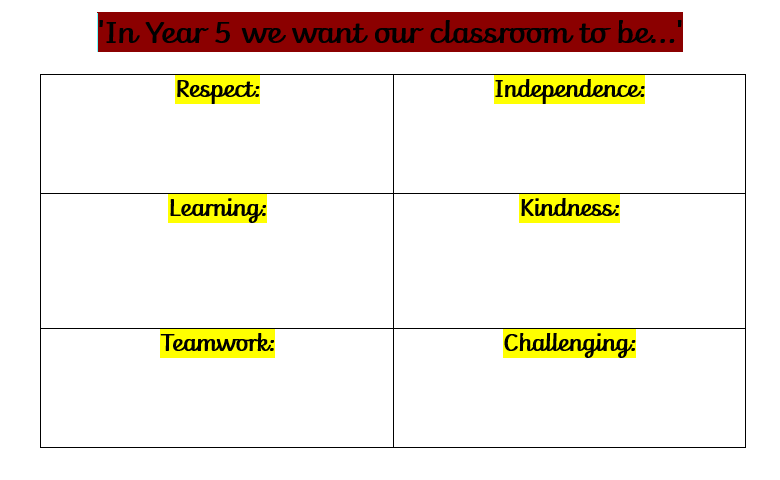
In groups of four, pupils create a poster titled 'In Year 5 we want our classroom to be...'
Headings:
• Respect
• Learning
• Teamwork
• Independence
• Kindness
• Challenge
Rules:
1. Each child shares one idea.
2. Before giving a new idea, pupils must first build on someone else's.
3. Groups agree on their best ideas to create one shared charter.
Example discussion:
Child A: 'We should help each other.'
Child B: 'I'd like to build on that. We could help each other before asking the teacher.'
Child C: 'Adding to that, we could celebrate children who help others.'
Child D: 'So we're saying we want everyone to support each other.'
Tongue Fu Talk Stems
Build:
• I'd like to build on your idea...
• I agree and...
• We could also...
• That makes me think...
Clarify:
• Can you explain that?
• What do you mean by...?
Summarise:
• So far we've agreed...
• Our main idea is...
Whole class discussion:
Each group nominates one speaker.
Sentence stem:
'Our group decided that...'
Reflection:
• Which idea changed because someone built on it?
• How did building on ideas improve your discussion?

"Mission Year 5"
"Someone has mixed up all of the Year 5 place value equipment! Your team are Place Value Detectives. Each mystery gives you clues about a number. Solve each one to earn a letter. At the end you'll unlock your Year 5 code."
Children work in mixed-ability groups.
Each completed challenge earns one puzzle piece.
When all five are completed they unlock a secret code.
|
Mystery 1 Build this number: 6,438 Then complete:
|
Answers: |
|
Mystery 2 A detective found:
Questions:
|
Answers: |
|
Mystery 3 A Year 5 pupil built 8,504 like this:
What is wrong? Correct the mistake and explain why.
|
Answers: |
|
Mystery 4 Represent: 10,000 Then explain:
|
Answers: |
|
Mystery 5 (Challenge) Represent 8,642 in as many different ways as you can. Example:
How many can your team find? |
Answers: |

LC:To write a descriptive narrative opening inspired by a visual image.
- I can use expanded noun phrases to describe.
- I can choose ambitious vocabulary.
- I can vary my sentence openings.
- I can engage the reader.
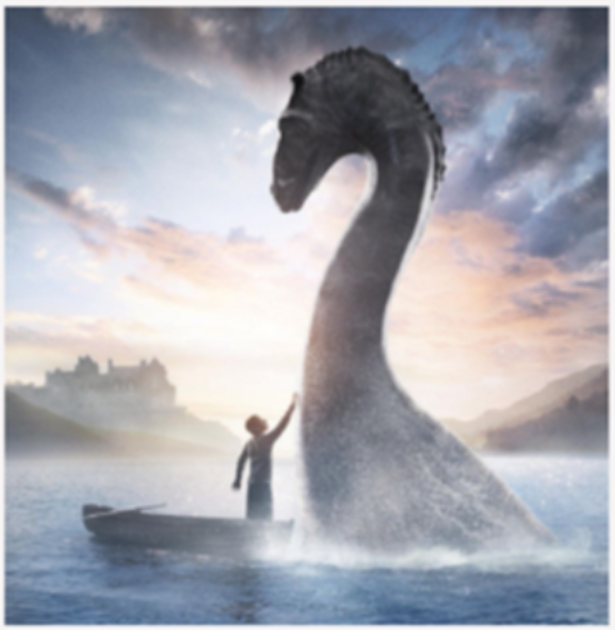
Starter (10 minutes)
See – Think – Wonder
Display the picture without saying anything.
Children have one minute of silent thinking.
Complete three headings.
I see...
Only things they can actually see.
Example:
- A huge creature
- A boat
- Mist
- Mountains
- Someone reaching out
I think...
Inference.
Example:
- The creature isn't dangerous.
- They've met before.
- The child is lost.
- The monster is protecting them.
I wonder...
Questions.
Examples:
- Why is the monster alone?
- Where are they?
- Can anyone else see it?
- Is the monster real?
Share ideas as a class.
Vocabulary Challenge (10 minutes)
On your post sticks generate vocabulary.
Challenge- think about:
Powerful verbs
loomed
towered
emerged
glided
stretched
hovered
Adjectives
ancient
colossal
mysterious
gentle
shadowy
majestic
Expanded noun phrases
the towering sea creature
the icy, silent lake
the tiny wooden boat
the mist-covered mountains
Similes/Metaphors
as silent as a ghost
like a mountain rising from the water
Oracy Activity (10 minutes)
Hot Seating
Ask:
Who is this?
Options:
- the child
- the monster
Choose one volunteer.
The class interviews them.
Examples:
Why are you here?
Are you frightened?
What happened before this moment?
Main Writing Task (30–40 minutes)
Your Challenge
Write the opening of a story inspired by the picture.
You may choose ONE of these story starters:
Option 1
Describe the moment.
Begin with:
The water had always been silent until...
Option 2
The child is the main character.
Begin with:
Everyone told me monsters weren't real...
Option 3
Write from the monster's point of view.
Begin with:
Humans are always afraid of what they don't understand...
REMEMBER TO WRITE IN YOUR BEST CURSIVE WRITING.
squishies primary picture news resource england 6th july 1 .pdf